

The Idea of Topophilia
The word topophilia, from the Greek topos (place) and philia (love), names a feeling many of us have had—but maybe never quite named. It is a powerful, almost reverent connection to place. The concept of topophilia explains, in part, why Sedona means so much to so many.
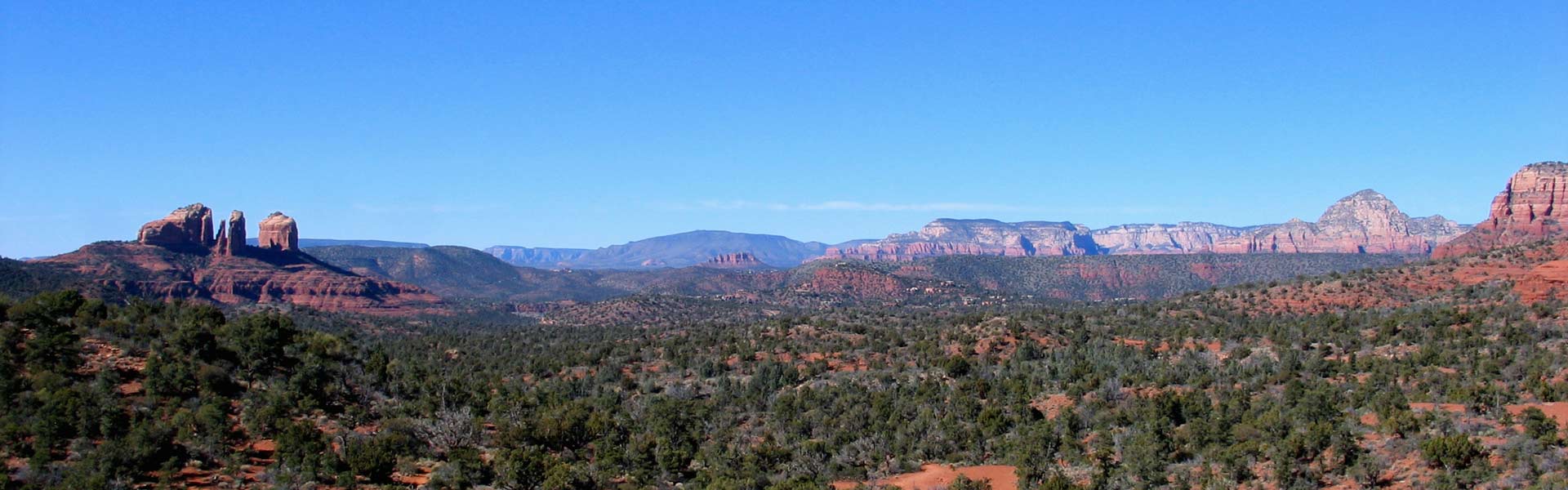
Topophilia—love of place—is affection and more than affection. It is a recognition that certain landscapes speak to something elemental in us. Sedona’s captivating red rock formations remind us of the endless variety of possibility and creativity—in the world, and in our lives. Sedona’s beauty, and the beauty’s effect is as powerful as it is unique. And the aesthetic experience of Sedona is unmistakably geological.
The Geological Narrative
Sedona’s red rock country tells a story that spans hundreds of millions of years. The cliffs and canyons are shaped by deposition, erosion, and the patient but powerful processes of time. Every formation reveals a chapter in the Earth’s history. The structure, texture, and complication remind us of both the art and the unexpected that can be found in each of our lives. To love Sedona is to be drawn into a geological narrative that very often helps us both craft and understand our own personal narrative.
There is a connection between scientific understanding and deep appreciation for Sedona’s natural beauty and perhaps no one understood it better than geologist Dr. Kennard Baker Bork. As an accomplished scientist, Ken would often say: “The beauty of Sedona seems magical to many, but it’s no mystery to me.” And yet, his technical acumen didn’t diminish his delight. Instead, knowledge and understanding deepened his aesthetic appreciation. To see the land as a geologist does is to recognize that beauty and science are natural companions. Every layer tells a story, and Ken had a gift for bringing those stories to life—especially when it came to the Permian Period (299 to 251 million years ago), when Sedona’s famous red rock layers were first laid down.
The Wisdom of Deep Time
Through topophilia, we discover how the vast, almost unfathomable scale of geology can bridge with the immediacy of our human condition. It helps us feel what science reveals: that nature is always in flux. Change is ever upon us, and as Buddhist teachings remind us, resisting change leads to suffering. In Sedona we can literally see that we and the world around us are part of the same unfolding, ongoing processes. This idea of continuous transformation also runs through Taoism, which Ken appreciated deeply, since he read Mandarin and enjoyed these resonant connections.
To love a place like Sedona is to develop a feel for geological time—slow, steady, unhurried. And that awareness reorients us. It teaches humility and patience. It shows us that real change may be imperceptible in the moment, yet powerful, and beautiful to behold in the long arc. It also sharpens our sense of urgency: our own time is brief, and precious.
Presence and Responsibility
Topophilia isn’t nostalgia. It’s presence. It’s a way of seeing and feeling that roots us in the world and reminds us of our responsibility to it. When we learn to love the land not just for its beauty but for its story, we begin to see ourselves as part of that story.
This understanding transforms us from passive observers into active participants in the ongoing narrative of place. Ken Bork embodied this transformation—he was more than a reader of that story, he was a co-author, bringing knowledge, curiosity, and care to his community.
Life and Time
The gift of topophilia lies not simply in the feeling itself, but in what it teaches us about engagement with the world. Places like Sedona offer us more than scenic beauty; they provide a masterclass in presence, impermanence, and our interconnectedness with forces far greater and older than ourselves. Through loving a place deeply—scientifically, aesthetically, spiritually—we learn to love more fully in all dimensions of our lives.
If we’re fortunate—and if we’re willing to do the work—we too can become co-authors of the places we love. And if we’re very lucky, we’ll do so with the same talent, tenacity, and joy that Ken brought to Sedona, teaching us that in learning to read the land’s story, we become more skilled authors of our own.

In Loving Memory of Dr. Ken Bork
Ken and Kay Bork kindly joined us on the very first Sedona Philosophy pilot in 2015. From that day forward, Ken was a steady presence—offering encouragement, insight, and his trademark wit. Ken and Kay also supported Philosophy in the Public Interest at Northern Arizona University, believing deeply in the value of public philosophy and community engagement.
Ken’s lectures on the Permian Period and other topics revealed not just a scientist’s mind, but a heart full of topophilia. He helped us see that geology isn’t just about rocks—it’s about time, transformation, and the meaning we create in the world. His presence is deeply missed, but his legacy continues—layered into his love of landscape and learning.


- Dialogue, Reflection, & Human Flourishing - September 20, 2026
- Topophilia – A Geologist’s Love of Place - August 13, 2025
- Cathedral Rock: The Heart of Sedona - August 5, 2025